Engine Fire Extinguishing
The engine fire extinguisher system consists of two engine fire extinguisher
bottles, two engine fire warning switches, two BOTTLE DISCHARGE lights, and
an EXT TEST switch. Either or both bottles can be discharged into either engine.
The engine fire warning switches are normally locked down to prevent
inadvertent shutdown of an engine. Illumination of an engine fire warning switch
or ENG OVERHEAT light unlocks the engine fire warning switch. The switches
may also be unlocked manually.
Pulling the engine fire warning switch up:
Rotating the engine fire warning switch electrically “fires” a squib, discharging
the extinguishing agent into the related engine. Rotating the switch the other way
discharges the remaining bottle. The L or R BOTTLE DISCHARGE light
illuminates a few seconds after the engine fire warning switch is rotated,
indicating the bottle has discharged.
The engine fire extinguisher system consists of two engine fire extinguisher
bottles, two engine fire warning switches, two BOTTLE DISCHARGE lights, and
an EXT TEST switch. Either or both bottles can be discharged into either engine.
The engine fire warning switches are normally locked down to prevent
inadvertent shutdown of an engine. Illumination of an engine fire warning switch
or ENG OVERHEAT light unlocks the engine fire warning switch. The switches
may also be unlocked manually.
Pulling the engine fire warning switch up:
- Closes both the engine fuel shutoff valve and the spar fuel shutoff valve.
- Closes the engine bleed air valve resulting in loss of wing anti–ice to the
affected wing and closure of bleed air operated pack valve. - Trips the generator control relay and breaker.
- Closes the hydraulic fluid shutoff valve. The engine driven hydraulic pump
LOW PRESSURE light is deactivated. - Disables thrust reverser for the related engine.
- Allows the engine fire warning switch to be rotated for discharge.
- Arms one discharge squib on each engine fire extinguisher bottle.
Rotating the engine fire warning switch electrically “fires” a squib, discharging
the extinguishing agent into the related engine. Rotating the switch the other way
discharges the remaining bottle. The L or R BOTTLE DISCHARGE light
illuminates a few seconds after the engine fire warning switch is rotated,
indicating the bottle has discharged.


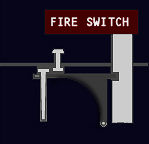
FIRE SWITCH LOCKED
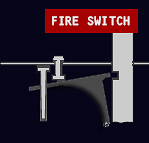
FIRE SWITCH UNLOCKED